When choosing Custom Countertops, homeowners often focus on material, color, and pattern. Thickness, however, can change the entire appearance of a kitchen. A countertop that looks perfectly balanced in one space may feel too heavy or too delicate in another.
Understanding how thickness works with cabinets, islands, edge profiles, and room proportions can help you create a more intentional kitchen design.
What Does Countertop Thickness Mean?
Countertop thickness refers to the depth of the material from its top surface to its lower edge. Different materials may be available in different thicknesses, and some designs use built-up edges to create the appearance of a thicker slab.
How Does Thickness Change Visual Weight?
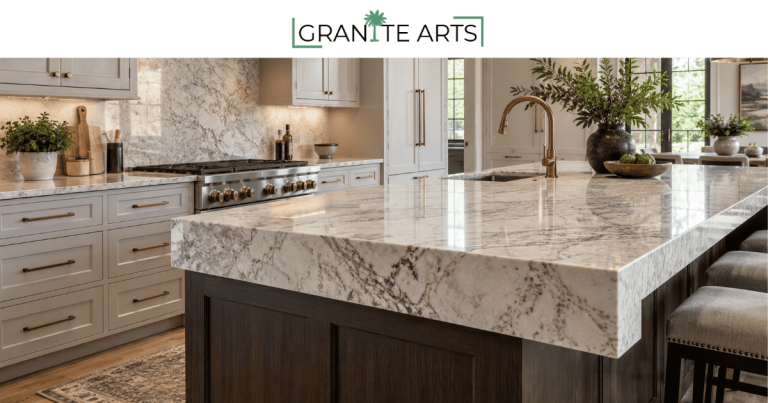
- A thicker countertop creates stronger visual presence. It can make an island or cabinetry feel more substantial and architectural.
- A thinner profile creates a lighter appearance and is often associated with streamlined or contemporary kitchens.
- Built-Up Edges Can Change the Appearance
Some countertop designs create a thicker-looking edge without requiring the entire slab to have the same depth. This can help achieve a dramatic appearance while accommodating material and installation requirements.
Why Is Countertop Thickness Important?
Thickness matters because countertops are a major horizontal element in the kitchen. Their proportions affect how cabinets, appliances, backsplashes, and islands appear together.
What Are the Main Design Benefits?
Choosing an appropriate thickness can:
- Improve visual balance between countertops and cabinetry
- Reinforce traditional, transitional, or modern design styles
- Make a kitchen island more prominent
- Complement specific countertop edge profiles
- Create a more customized finished appearance
What Problems Should You Avoid?
Choosing thickness based only on appearance can create problems. An oversized edge may overwhelm small cabinetry, while an extremely thin-looking surface may feel out of proportion in a large traditional kitchen.
Material characteristics and fabrication requirements should also influence the decision.
How Does Countertop Thickness Affect Kitchen Style?
Different thicknesses create different visual impressions, even when the countertop material stays the same.
Step 1: Consider the Overall Kitchen Style
Modern kitchens often benefit from clean, slimmer profiles because they emphasize simple lines.
Traditional or luxury-inspired kitchens may work well with visually thicker countertops that add weight and detail.
Step 2: Look at Cabinet Proportions
Large islands, tall cabinetry, and substantial cabinet doors can support a more prominent countertop edge. Smaller kitchens may benefit from a less visually dominant profile.
Step 3: Coordinate the Edge Profile
Countertop thickness and edge style work together. A simple eased edge produces a different result than a detailed decorative profile.
What Should You Expect During This Step?
- Your fabricator can explain which edge treatments work best with your selected material and desired thickness.
How Do You Choose the Right Thickness for Custom Countertops?
There is no single thickness that works for every kitchen. The best option depends on the room’s scale, materials, cabinetry, and design goals.
- Consider Your Kitchen Size -> In compact kitchens, visually lighter countertops can help maintain an open appearance. Larger kitchens may comfortably accommodate more substantial surfaces.
- Compare Countertop Materials -> Granite, quartz, marble, and other materials have different fabrication characteristics. Available slab thicknesses and installation methods can therefore vary.
- Think About Your Kitchen Island -> A large island often acts as a focal point. A thicker-looking countertop edge can emphasize it and create a furniture-like appearance.
Questions to Ask Before Making a Decision
Ask yourself:
- Does the thickness complement my cabinet style?
- Will it look proportional to my island?
- Which edge profile works best?
- Does the selected material support the desired design?
- Will the thickness coordinate with nearby countertops?
How Much Does Countertop Thickness Affect Cost?
Countertop thickness can influence project cost, but there is no universal price difference. Pricing depends on the material, slab requirements, fabrication method, edge treatment, installation complexity, and project size.
What Factors Affect the Final Price?
Important variables include:
- Countertop material
- Number and size of slabs
- Edge fabrication
- Built-up edge construction
- Kitchen layout
- Cutouts for sinks or cooktops
- Installation requirements
Is the Cheapest Option Always the Best Choice?
Not necessarily. Countertops are a long-term feature, so fabrication quality, material suitability, installation, and design should carry more weight than price alone.
What Are the Most Common Countertop Thickness Mistakes?
Small design decisions can have a surprisingly large visual impact.
Mistake #1: Choosing Thickness Without Considering Cabinets
- A countertop that looks attractive in a showroom might not suit the proportions of your cabinetry.
Mistake #2: Ignoring the Edge Profile
- Thickness and edge details should complement one another. Combining a visually heavy thickness with an elaborate edge can sometimes overwhelm a simple kitchen.
Mistake #3: Following Trends Without Considering the Room
- A trendy thin or oversized countertop may not suit every home. Aim for a profile that fits your architecture and overall kitchen design.
When Should You Contact a Countertop Professional?
Professional guidance is especially helpful when you are comparing materials, changing countertop thickness, designing a large island, or trying to achieve a specialized edge treatment.
What Are Signs You May Need Professional Help?
Consider speaking with a countertop specialist when:
- You are unsure which thickness suits your material.
- Your kitchen includes unusual dimensions.
- You want a thick built-up appearance.
- Your island requires a distinctive design.
- You need help coordinating countertops with cabinetry.
What Should You Ask Before Getting Started?
Ask what thickness options are available, which edges work with your material, how seams will be handled, and how the final dimensions will affect surrounding cabinetry and appliances.
Frequently Asked Questions About Custom Countertops
Are Thicker Countertops Better?
Not automatically. Thickness is both a design and fabrication consideration. The best option depends on the material, cabinetry, kitchen proportions, installation requirements, and desired appearance.
Do Thick Countertops Make a Kitchen Look More Expensive?
A substantial countertop edge can create a luxurious, architectural appearance, particularly on large islands. However, proportion and craftsmanship matter more than thickness alone.
Are Thin Countertops Good for Modern Kitchens?
Yes. Slimmer profiles often complement modern kitchens because they reinforce clean lines, flat-panel cabinets, and minimalist design.
Can My Kitchen Island Have a Different Countertop Thickness?
Potentially. Using a more prominent countertop treatment on an island can help establish it as a focal point while maintaining a simpler perimeter design.
Does Countertop Thickness Affect the Edge Profile?
Yes. Some edge profiles work better with certain material dimensions and fabrication methods. Discussing both decisions with your fabricator helps create a more cohesive result.
Create the Right Countertop Proportions for Your Kitchen
Countertop thickness can dramatically influence how substantial, modern, traditional, or balanced your kitchen feels. The right choice should complement your material, cabinetry, island dimensions, edge profile, and overall design rather than simply following a trend.
If you are planning Custom Countertops for a new kitchen or remodel, Granite Arts Charleston can help you compare materials, design details, and fabrication options. Contact the team to discuss your project and find a countertop solution that fits both your kitchen and your style.